
Implant Supported Dentures vs Overdentures
By Anaheim Implants & Dental Group Editorial Team · Updated 2026-07-22
For implant supported dentures, implant-supported dentures fix permanently or snap onto 4–8 implants per arch. Overdentures typically attach to 2–4 implants and remain removable for daily cleaning. Pricing varies by case and implant count; contact Anaheim Implants & Dental Group directly for a personalized cost estimate. Anaheim Implants & Dental Group determines the exact number needed based on jawbone density and arch requirements.
Implant-supported dentures snap onto implants and stay removable for cleaning. Overdentures follow the same principle but often use fewer implants with a bar or ball attachment. Full-arch cases typically require four to six implants per jaw. Pricing varies widely once bone grafting and maintenance factor in. Contact Anaheim Implants & Dental Group directly for details specific to your case.
Summary of Key Considerations for Your Treatment Plan
Implant overdenture pricing varies by case when bone grafting, temporary dentures, and maintenance fees are included; contact Anaheim Implants & Dental Group directly for a personalized estimate.
Implant-supported dentures attach permanently to jawbone implants, while overdentures rest on gums with implant support.
Overdentures require fewer implants than implant-supported dentures for comparable stability and function.
Hidden costs like bone grafting and temporary dentures significantly increase initial implant overdenture quotes for patients.
Implant overdenture pricing varies by case when bone grafting, temporary dentures, and maintenance fees are included; contact Anaheim Implants & Dental Group directly for a personalized estimate.
Implant-supported dentures attach permanently to jawbone implants, while overdentures rest on gums with implant support.
Overdentures require fewer implants than implant-supported dentures for comparable stability and function.
Hidden costs like bone grafting and temporary dentures significantly increase initial implant overdenture quotes for patients.
Why Do Traditional Dentures Keep Failing You?
Traditional dentures fail patients because they rest on gum tissue rather than anchoring to the jawbone. cite-1 Gum tissue shifts, shrinks, and changes shape over time. That instability creates the slipping, clicking, and discomfort so many denture wearers know well.
Full dentures are built to replace every tooth across an upper or lower arch. Design intent does not solve the underlying mechanical problem. These appliances remain removable prosthetics, held in place largely by suction and adhesive rather than a fixed structural foundation. Without a stable anchor point, chewing efficiency drops and daily function becomes a persistent negotiation rather than a given.
Why Do Dentures Feel Loose After a Few Years?
Gum ridges continue to change shape long after teeth are lost. A denture fitted well initially loses its precise fit as that tissue recedes. We see this pattern often in patients who report a “good fit” turning into frequent adjustments within a few years. The appliance itself has not necessarily failed; the foundation beneath it has simply moved.
Is It Normal to Feel Anxious About a Failing Denture or Implant?
Losing confidence in a failing denture or implant is a common. Understandably daunting experience for patients pursuing long-term tooth replacement. cite-2 We hear this concern regularly from patients who feel their prosthetic can no longer be trusted day to day. That anxiety is a legitimate signal worth addressing, not a symptom to dismiss.
The core issue across these scenarios is consistent:
Foundation instability — reliance on gum tissue instead of bone
Ongoing tissue change — ridges shrink, altering fit over time
Removability trade-offs — convenience for cleaning, but reduced daily security
Foundation instability — reliance on gum tissue instead of bone
Ongoing tissue change — ridges shrink, altering fit over time
Removability trade-offs — convenience for cleaning, but reduced daily security
Patients considering implant supported dentures, overdentures, or hybrid dentures are often responding directly to these recurring failure points.
What Exactly Are Implant Supported Dentures?
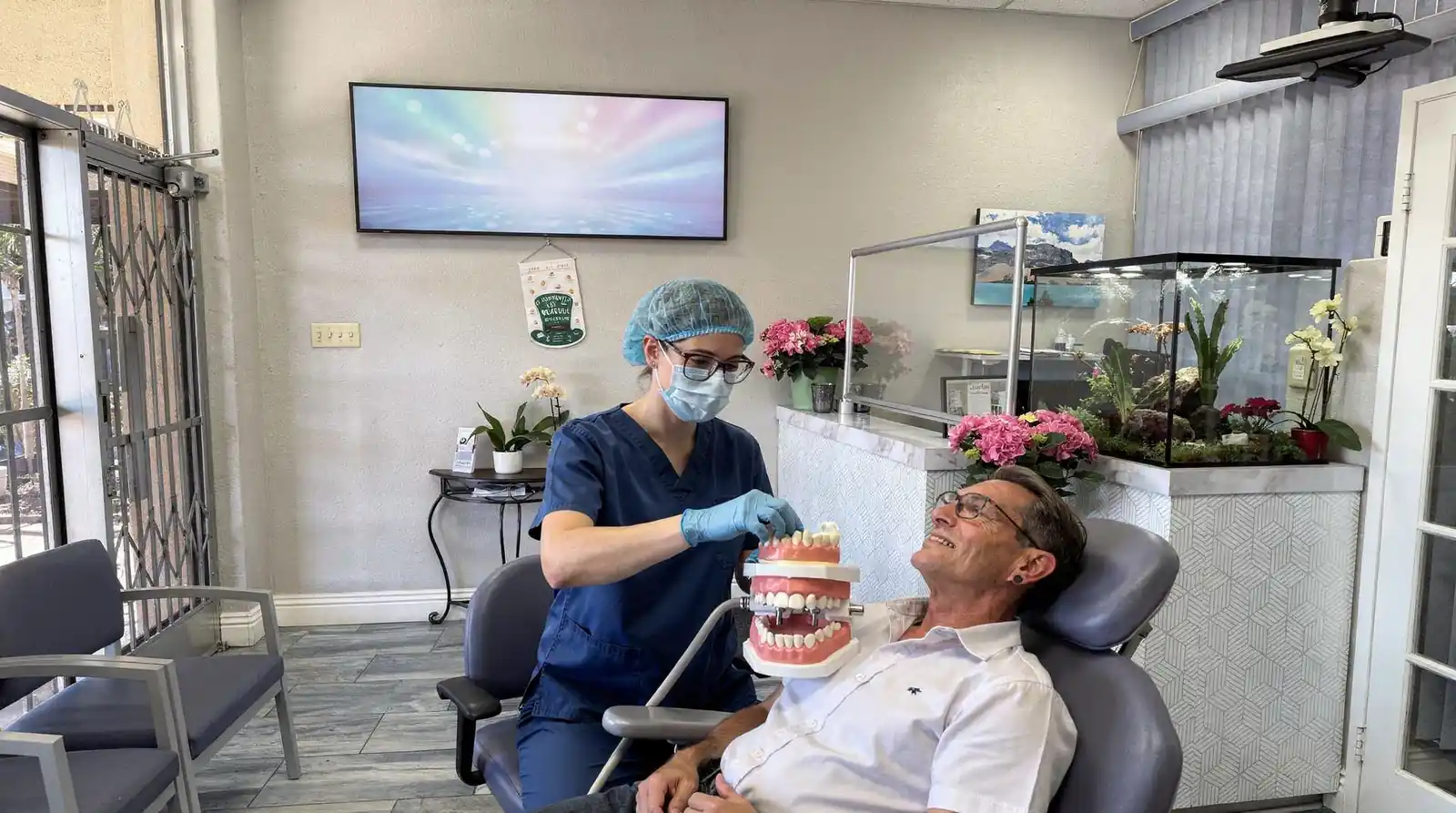
Implant supported dentures replace missing teeth by anchoring a prosthetic to a small number of surgically placed implants rather than letting it rest directly on the gums. This design creates a stable foundation that traditional dentures simply cannot match. One common form, the overdenture, is a full denture that clips onto a limited number of implants for a secure, snap-in fit. Another variation, the hybrid denture, connects to implants through a fixed bar and stays in place permanently, without removal for daily cleaning.
We build every implant-supported case around function, not just appearance. Compared to unsupported dentures, implant-anchored prosthetics reduce facial sagging, restore a fuller smile, and improve chewing ability. cite-3 Speech also becomes noticeably clearer, since the prosthetic no longer shifts or slips against the palate.
Are Implant Supported Dentures the Same as Overdentures?
Not exactly. An overdenture is one specific type of implant supported denture, distinguished by its removable, snap-on connection to the implants. Other implant-supported options, like hybrid dentures, use fixed connections instead. We consider the broader term an umbrella category, with overdentures and hybrid dentures as two of its most common expressions.
How Do We Determine Which Option Fits a Patient?
Dr. Thu Nguyen evaluates jawbone density, remaining tooth structure, and daily care preferences before recommending a design. With over 16 years of clinical experience, Dr. Nguyen also completed advanced graduate training in prosthodontics, the specialty dedicated to restorations like overdentures. cite-4 That specialized background allows our team to match each patient with a solution built for long-term stability.
Feature
Overdenture
Hybrid Denture
Connection to implants
Removable, snaps on
Fixed, bar-retained
Daily removal
Yes
No
Implant count needed
Fewer
More
How Do Overdentures Differ From Hybrid Dentures?
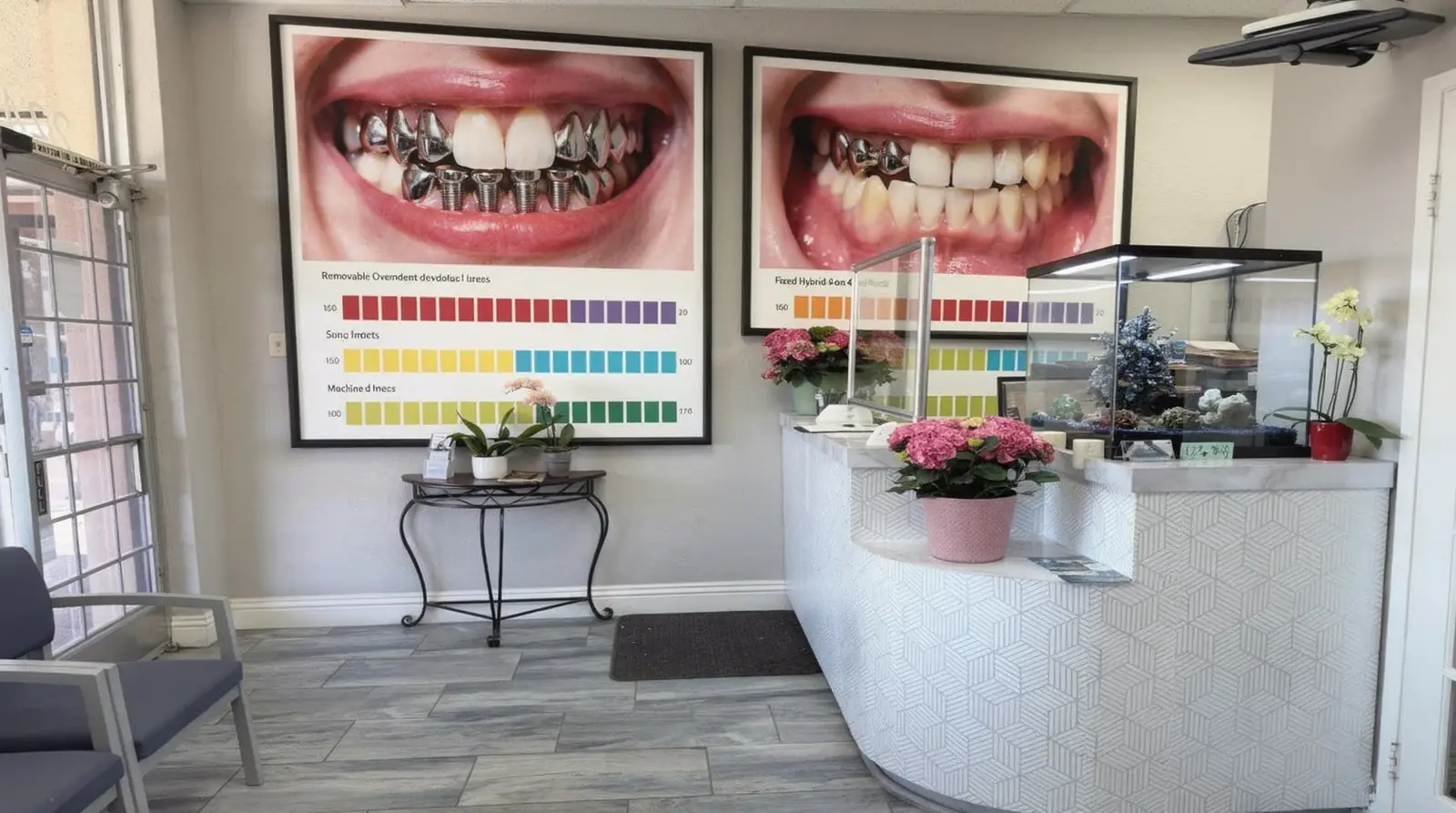
Overdentures remain removable, while hybrid dentures stay fixed permanently in the mouth. That single distinction drives nearly every difference in cost, maintenance, and daily function between the two options.
Overdentures snap securely onto dental implants using attachment points built into the appliance. Patients remove them nightly for cleaning. The design delivers a stable, comfortable fit at a lower cost than a fixed hybrid bridge. We often recommend this route for patients balancing budget concerns against the desire for implant stability.
Hybrid dentures, by contrast, use a fixed full-arch design most commonly associated with All-on-4 treatment. Four strategically placed implants support a permanent bridge that patients never remove. Dr. Thu Nguyen specializes in All-on-4 procedures, helping patients throughout Anaheim and the surrounding area achieve life-changing, permanent results. cite-5
Cost separates these two paths significantly:
Feature
Overdentures
Hybrid (All-on-4)
Attachment
Snaps onto implants, removable
Fixed permanently to implants
Typical cost per arch
Varies by case; contact us directly
Varies by case; contact us directly
Daily removal
Required for cleaning
Never removed
Implant count
Varies, fewer than fixed designs
Four per arch
Which Option Costs Less Long-Term?
Overdentures generally carry a lower upfront price than fixed hybrid restorations. Pricing varies by package and individual case. Contact Anaheim Implants & Dental Group directly for a personalized cost estimate that reflects the permanent bridge design. The engineering behind the four-implant framework.
Can Patients Switch From Overdentures to a Fixed Hybrid Later?
Many patients start with overdentures and transition to a fixed hybrid solution once budget and bone health allow. We evaluate jawbone density and implant placement carefully before recommending either path. The right choice depends on individual anatomy and long-term goals rather than price alone.
How Many Implants Does Your Arch Actually Need?
Implant count depends entirely on the type of restoration chosen, not on a fixed rule for every patient. A fixed hybrid, full-arch restoration such as All-on-4 requires only four strategically positioned implants per arch. An overdenture typically uses a smaller number of implants placed to support a removable appliance. cite-5 The difference in implant count directly shapes cost, stability, and daily maintenance.
We determine the correct implant count for each full-arch case based on jawbone density, remaining bone volume, and the patient’s functional goals. Dr. Thu Nguyen specializes in All-on-4 procedures, giving her the clinical judgment needed to match implant placement to each patient’s anatomy rather than applying a one-size-fits-all number.
Do Overdentures Need Fewer Implants Than a Fixed Bridge?
Generally, yes. Overdentures rely on a small number of dental implants that clip into a removable denture, instead of the higher implant count and rigid framework required for a fixed hybrid dentures bridge. Fewer implants can mean a lower upfront cost. The trade-off is a removable appliance rather than a permanently fixed set of teeth.
What Determines the Right Implant Count for Me?
Three factors drive the decision: budget, jawbone condition, and personal preference for removable versus fixed teeth. Patients with limited bone volume or tighter budgets often start with an overdenture supported by fewer implants. Those seeking a permanent, non-removable solution typically move toward a four-implant hybrid arrangement instead.
Restoration Type
Typical Implant Count
Removable?
Implant supported dentures (overdenture)
Small number, fewer than fixed bridge
Yes
All-on-4 hybrid bridge
Four per arch
No
We evaluate each of these factors during a full-arch consultation to recommend the implant count that best fits each patient’s mouth and lifestyle.
What Hidden Costs Inflate Overdenture Pricing?
Initial quotes for overdentures rarely reflect the final bill. Bone grafting, temporary dentures, and ongoing maintenance often sit outside the base price, and each of those additions raises the total substantially. A quote that looks affordable at first glance can grow far beyond the original estimate once these components enter the picture.
We believe every patient deserves to see these costs before treatment begins, not after.
What expenses get left out of the initial estimate?
Several categories of expense commonly fall outside the headline number quoted for implant supported dentures:
Bone grafting — required when the jawbone lacks sufficient density to support implants
Temporary dentures — worn during the healing period before final restorations are placed
Maintenance — adjustments, relines, and component replacement over the life of the appliance
Bone grafting — required when the jawbone lacks sufficient density to support implants
Temporary dentures — worn during the healing period before final restorations are placed
Maintenance — adjustments, relines, and component replacement over the life of the appliance
Each item adds real dollars to the final total. Skipping this discussion at the consultation stage leaves patients exposed to costs they never planned for.
Does insurance actually cover these hidden costs?
Coverage for implant-based dentures, including hybrid dentures, remains complicated and varies significantly from one plan to the next. cite-6 Some plans cover portions of the surgical work while excluding the prosthetic components, or the reverse. We do not treat insurance as a footnote in the pricing conversation.
Anaheim Implants & Dental Group remains committed to affordability and accessibility, accepting most major insurance plans, including Denti-Cal. This commitment matters because families across Anaheim, Westminster, Stanton, and Garden Grove deserve personalized, affordable care without financial surprises mid-treatment. cite-5
We walk every patient through a full cost breakdown before any procedure begins, addressing grafting needs, temporary appliances, and long-term maintenance up front. That transparency protects patients from the gap between a quoted price. The true cost of restoring a full, functional smile.
Implant Supported Dentures Or Regular Dentures: Which Wins?
Implant supported dentures win on stability and long-term function, while regular dentures win on upfront affordability. Our team at Anaheim Implants & Dental Group views this choice through three lenses: function, biology, and finances. Each lens changes the answer, so no single option fits every patient.
Regular dentures are removable prosthetics that replace a full arch of missing teeth. cite-1 They rest on the gums rather than anchoring to the jawbone. That design keeps initial costs lower. It also means less chewing stability and a higher risk of slipping during meals or conversation.
Implant supported dentures anchor to titanium implants placed directly in the jawbone. This connection restores a level of stability that gum-supported dentures cannot match. Patients gain a firmer bite and a more secure, natural-feeling smile.
Which Option Restores Function Faster?
Same-day, immediate-loading implant procedures let patients leave our office with a functional smile in hours, not weeks. cite-7 Conventional denture fittings typically require multiple visits and an adjustment period before the bite feels normal. Immediate loading allows us to place implants. Fit temporary crowns on the same day, compressing a process that traditional dentures cannot match.
Which Option Costs Less Over Time?
Regular dentures cost less initially but often require relines, adjustments, and eventual replacement as the jawbone changes shape. Implant supported dentures carry a higher upfront investment, tied to the surgical placement of implants.
Factor
Regular Dentures
Implant Supported Dentures
Stability
Lower, gum-supported
Higher, bone-anchored
Timeline
Multiple visits
Same-day option available
Upfront cost
Lower
Higher
Long-term maintenance
Frequent relines
Fewer adjustments
Our team evaluates jawbone health, budget, and daily function needs before recommending either path. Overdentures and hybrid dentures offer additional middle-ground solutions worth discussing during a consultation.
Why Choose Anaheim Implants & Dental Group?
Anaheim Implants & Dental Group delivers full-arch tooth replacement backed by specialist-level prosthodontic training. Dr. Thu Nguyen brings more than 16 years of clinical experience to every case involving implant supported dentures, overdentures, and hybrid dentures. cite-4 That depth of practice matters when the treatment plan involves permanent changes to the jaw and long-term function.
Dr. Nguyen’s academic path reinforces this expertise. She earned her Doctor of Dental Surgery degree from the University of Medicine. Pharmacy in Ho Chi Minh City, Vietnam, building a strong foundation in restorative dentistry. cite-4 She then completed a Master of Science in Prosthodontics at the same university. The exact specialty responsible for designing overdentures and hybrid restorations that fit, function, and last. cite-4
Does Dr. Nguyen have U.S.-based dental training?
Yes. Dr. Nguyen furthered her training in the United States, earning a Doctor of Dental Medicine degree from the University of Alabama at Birmingham School of Dentistry. cite-4 This step ensured her prosthodontic expertise aligned with U.S. clinical standards before treating patients in Anaheim.
Is Dr. Nguyen certified in implant dentistry specifically?
Yes. Dr. Nguyen holds recognition as a Distinguished Fellow of the D