
By Anaheim Implants & Dental Group Editorial Team · Updated 2026-07-22
For senior dental care, anaheim Implants & Dental Group offers seniors traditional implants, All-on-4, and implant-supported dentures, with eligibility based on bone density and overall health rather than age alone. Pricing varies by package; contact Anaheim Implants & Dental Group directly for cost details. Their 10-person Anaheim, CA team evaluates candidates individually, providing financing options to offset expenses for qualified senior patients.
Dental implants remain safe and effective for seniors, with success rates comparable to younger patients. Eligibility depends on jawbone density and gum health rather than age, and healing typically takes 3–6 months. Anaheim Implants & Dental Group, a 10-employee Anaheim, CA practice, offers fixed and removable implant-supported denture options.
Age imposes no strict barrier to dental implant eligibility; jawbone density, gum health, and overall medical condition determine candidacy. Seniors with insufficient bone often qualify after bone grafting. Options range from single implants to full-arch All-on-4 solutions and implant-supported dentures. Healing typically requires 3–6 months. We accept most major insurance plans, including Denti-Cal, to support affordability.
Key Takeaways
Dental implants achieve success rates comparable to younger patients for seniors with good overall health.
Implant-supported dentures provide a more stable alternative to traditional removable dentures for multiple missing teeth.
Age alone does not determine implant eligibility; jawbone density and gum condition matter most.
Anaheim Implants & Dental Group in Anaheim, CA serves seniors seeking long-lasting implant solutions.
Dental implants achieve success rates comparable to younger patients for seniors with good overall health.
Implant-supported dentures provide a more stable alternative to traditional removable dentures for multiple missing teeth.
Age alone does not determine implant eligibility; jawbone density and gum condition matter most.
Anaheim Implants & Dental Group in Anaheim, CA serves seniors seeking long-lasting implant solutions.
Are Dental Implants Safe for Seniors?
Dental implants qualify as safe for most older adults. Overall health matters far more than the number on a birthday cake when determining candidacy. At Anaheim Implants & Dental Group, we evaluate each patient individually rather than relying on age alone to make treatment decisions.
Senior dental care requires a different lens than general dentistry, and safety data support that shift. Success rates for implants placed in older patients run comparable to those seen in younger patients. This consistency holds true because implant integration depends on bone quality, gum health, and healing capacity — not chronological age.
We approach every case through the framework of geriatric dentistry, which accounts for the medical realities unique to aging patients. Conditions like osteoporosis, diabetes, or blood-thinning medications can factor into treatment planning, but few of them rule out implants entirely. Our team reviews medical history, current medications, and jawbone condition before recommending any surgical path.
Is There an Age Limit for Getting Dental Implants?
No age is too old for dental implants. We have placed senior implants for patients well into their eighties and beyond, provided their health status supports healing. The deciding factors remain jawbone density, gum condition, and general wellness — never a number on a birth certificate.
What Makes Implants Safe for Older Patients Specifically?
Safety for older patients rests on careful screening rather than blanket restrictions. Our evaluation process considers:
Jawbone density and volume available for implant placement
Gum tissue health and presence of active disease
Chronic conditions such as diabetes or osteoporosis
Current medications, including blood thinners
Healing capacity based on overall physical condition
Jawbone density and volume available for implant placement
Gum tissue health and presence of active disease
Chronic conditions such as diabetes or osteoporosis
Current medications, including blood thinners
Healing capacity based on overall physical condition
Patients searching for reliable dental implants in Anaheim can turn to Dr. Thu Nguyen and our team for guidance rooted in this individualized, evidence-based process. We prioritize a thorough assessment over assumptions, ensuring every recommendation reflects each patient’s actual health profile rather than outdated beliefs about aging and surgery.
What Eligibility Factors Matter Most for Seniors?
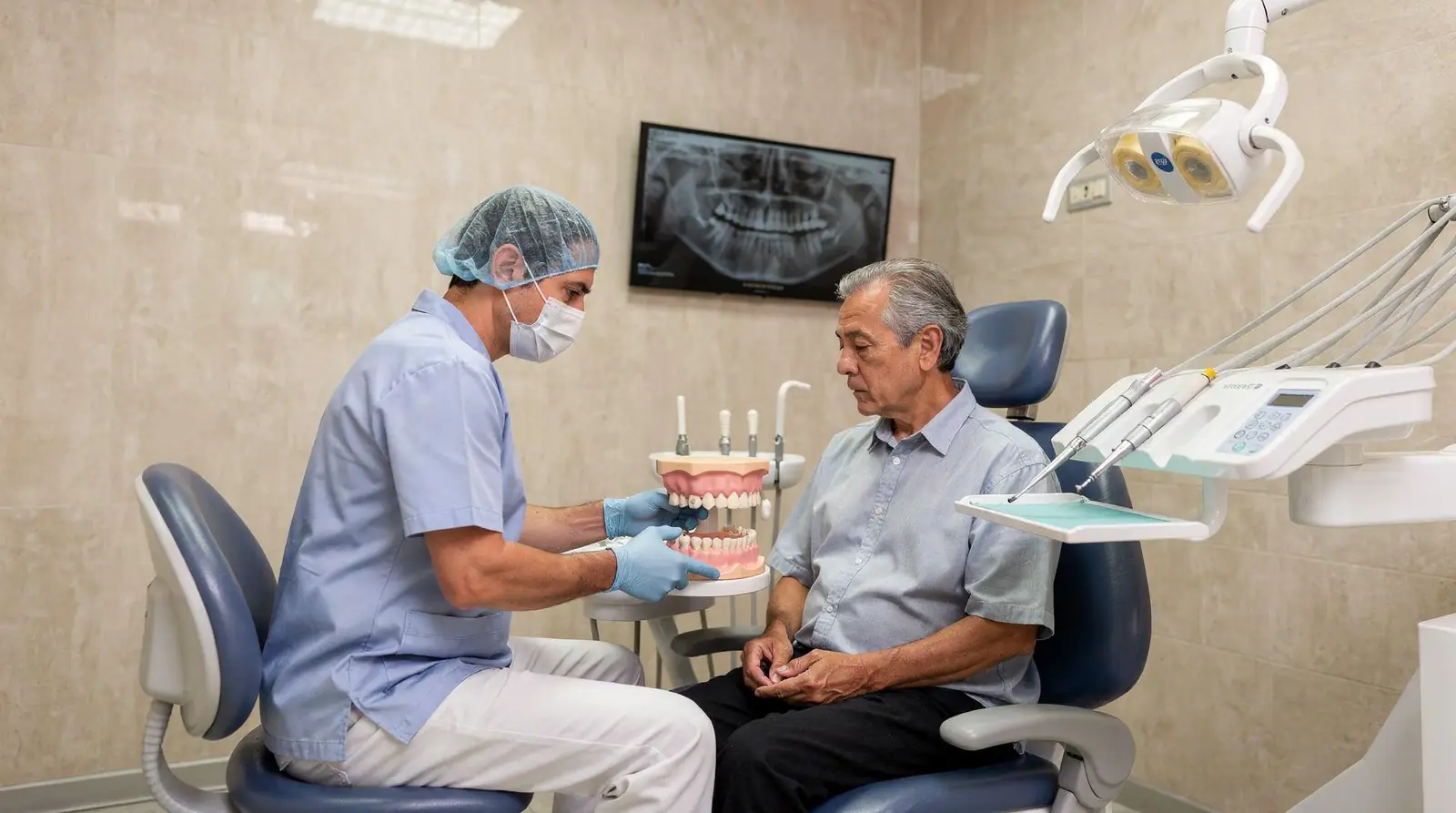
Overall health, jawbone density, and gum condition determine eligibility for senior implants — not chronological age. Anaheim Implants & Dental Group evaluates each patient against these three factors before recommending a treatment plan. A senior in strong general health with adequate bone structure often qualifies as readily as a much younger patient.
Senior dental care decisions should never hinge on a birth date alone. We assess the whole picture: how well-controlled any chronic conditions are, how dense the jawbone remains, and how healthy the gum tissue looks under examination. This approach reflects sound geriatric dentistry practice, where individual physiology outweighs generic age cutoffs.
Bone density plays a central role in this evaluation. Years of missing teeth or long-term denture wear can thin the jawbone. Insufficient density may require a bone grafting procedure before implant placement moves forward. We build grafting into the treatment timeline whenever imaging shows the bone cannot. Support an implant on its own.
Does Bone Loss Rule Out Implant Treatment?
Bone loss does not automatically disqualify a patient from implant treatment. It simply adds a preparatory step: a bone graft rebuilds the foundation needed for long-term implant stability. Our team reviews imaging carefully and outlines whether grafting fits into the plan before any surgical date is set.
How Long Does Recovery Take for Seniors?
Healing after implant placement typically spans three to six months, regardless of the patient’s age. Good oral hygiene and a temporary shift to soft foods support steady recovery during this window.
Key factors we weigh at every consultation include:
Overall systemic health and management of chronic conditions
Jawbone density and volume available at the implant site
Gum tissue health and presence of active disease
Healing capacity, supported by hygiene habits and diet during recovery
Overall systemic health and management of chronic conditions
Jawbone density and volume available at the implant site
Gum tissue health and presence of active disease
Healing capacity, supported by hygiene habits and diet during recovery
Dr. Thu Nguyen brings advanced credentials to this evaluation process, holding recognition as a Distinguished Fellow of the Dental Implant Institute. That level of specialized training informs how our practice screens each senior patient for candidacy and long-term success.
Which Implant Options Suit Seniors Best?
Two implant paths serve most seniors well: implant-supported dentures for multiple missing teeth. All-on-4 dental implants for a full arch. Choosing between these options depends on remaining tooth count, jawbone condition, and how quickly a stable bite needs restoring. We guide patients through senior implants decisions with this exact framework, weighing stability, cost, and treatment time.
For seniors missing several teeth, implant-supported dentures give a far more stable and comfortable foundation than removable dentures resting loosely on the gums. This stability translates into steadier chewing and clearer speech, two areas where traditional dentures often fall short. Our approach to senior dental care always starts with matching the solution to the patient’s actual bone. Gum condition, not a one-size answer.
For patients missing most or all teeth in an arch, All-on-4 dental implants provide a permanent solution using just four strategically placed implants per jaw. This design anchors a full replacement arch without the need for individual implants at every tooth site. Dr. Thu Nguyen specializes in All-on-4 procedures, helping patients throughout Anaheim and surrounding areas achieve life-changing results through careful geriatric dentistry planning.
Is All-on-4 Faster Than Traditional Implants?
Yes. All-on-4 treatment moves faster and costs less than traditional implant methods while still restoring a complete, functional smile. Traditional implant plans often require healing time between multiple placement stages; All-on-4 consolidates that timeline considerably.
Comparing the two main paths:
Factor
Implant-Supported Dentures
All-on-4 Implants
Best for
Multiple missing teeth
Full-arch tooth loss
Stability
High, fixed anchoring
Permanent, four-implant support
Treatment speed
Moderate
Faster than traditional implants
Longevity
15–20+ years
15–20+ years
Compared with dentures needing replacement every 5 to 8 years, both implant paths offer a longer-lasting, more durable investment in daily comfort and function.
Can Seniors Get Same-Day Implant Results?
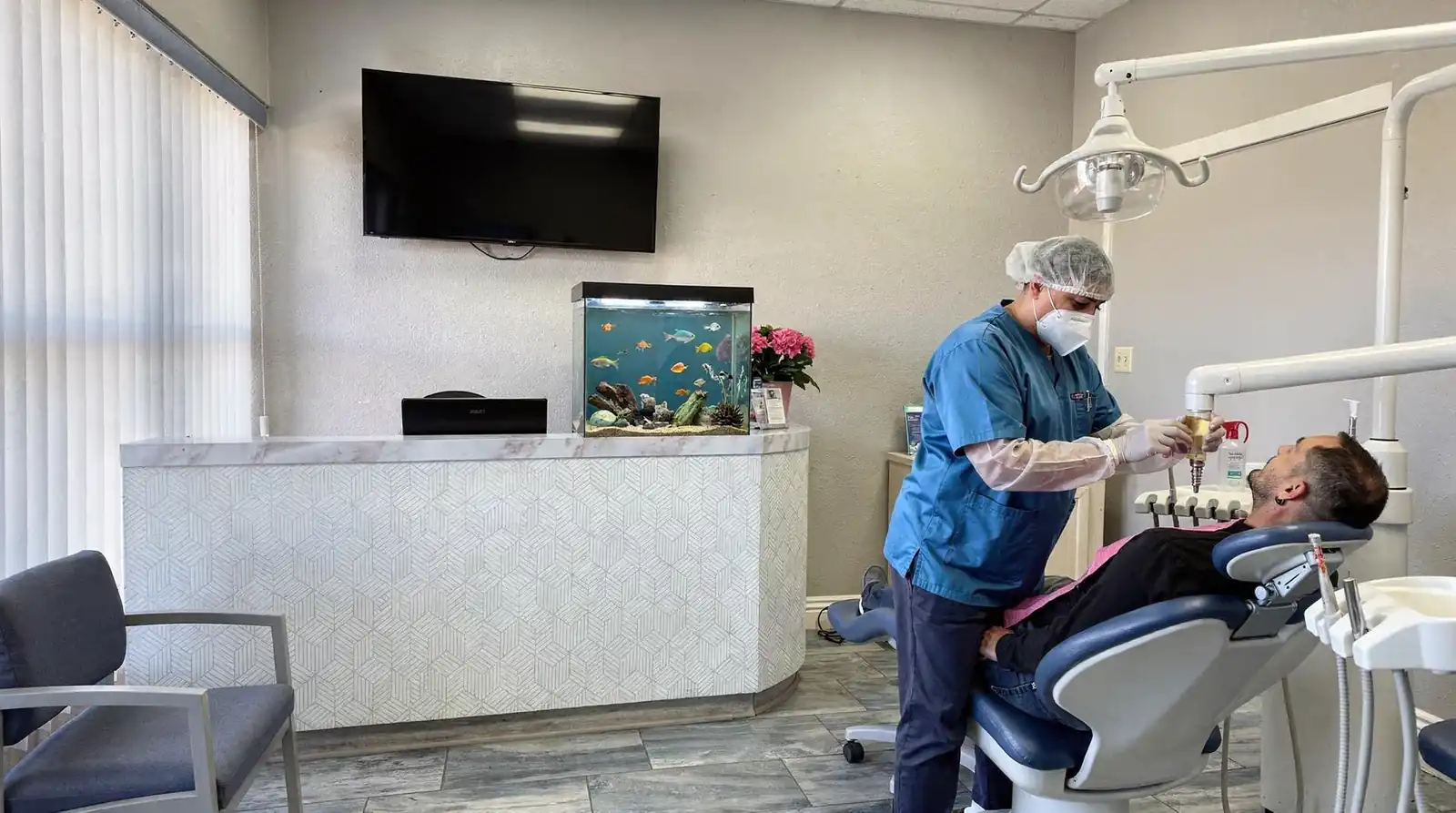
Yes, same-day dental implants allow placement and temporary crown fitting within a single visit at our Anaheim practice. Seniors leave our office with a functional smile in hours rather than waiting months between procedures. This approach matters greatly for older patients who value efficient, well-coordinated senior dental care over drawn-out treatment plans.
Traditional implant treatment often requires multiple appointments spread across several months, with healing periods separating each surgical stage. Same-day implants, also called immediate loading implants, change that pattern entirely. We place the implant and attach a temporary crown in one appointment, eliminating the extended wait times and repeat visits that traditional implants typically demand.
Why does immediate loading matter for older patients?
Appointment fatigue is real for seniors managing transportation limitations, caregiver schedules, or multiple health conditions. Immediate loading delivers functionality right away, not just convenience, which reduces the physical and logistical burden of frequent dental visits. For patients coordinating care across specialists, fewer appointments translate directly into less strain on daily routines.
What makes a senior a good candidate for immediate loading?
Candidacy depends on individual factors our team evaluates during a comprehensive exam. geriatric dentistry considers overall health alongside oral condition. Our approach to senior implants always begins with careful assessment rather than assumption based on age alone.
Same-day implants offer distinct advantages worth weighing against traditional timelines:
Single visit for placement and temporary crown — no separate follow-up surgery required for initial restoration
Immediate functionality — patients regain a working bite the same day
Fewer total appointments — reduces travel burden and scheduling complexity for patients and caregivers alike
Single visit for placement and temporary crown — no separate follow-up surgery required for initial restoration
Immediate functionality — patients regain a working bite the same day
Fewer total appointments — reduces travel burden and scheduling complexity for patients and caregivers alike
We evaluate every senior patient individually before recommending an immediate loading approach, ensuring the treatment plan matches each person’s health profile and goals.
What If a Senior’s Implant Fails?
Implant failure requires prompt evaluation, not panic. Anaheim Implants & Dental Group treats failure as a solvable clinical problem, addressed through careful diagnosis and a clear plan for next steps.
Senior implants can fail for several reasons, ranging from insufficient bone integration to infection around the implant site. Our team evaluates each case individually, since the underlying cause determines the safest path forward. This evaluation is central to sound geriatric dentistry, where overall health history carries as much weight as the implant site itself.
We view early recognition as the most protective habit a patient or caregiver can build. Understanding both the challenges and the available solutions removes much of the uncertainty that follows a failed implant. This is where consistent senior dental care, including scheduled follow-ups, makes the difference between a minor setback and a prolonged problem.
What are the warning signs of implant failure?
Persistent discomfort, looseness, gum recession around the implant, or swelling that does not resolve all warrant attention. We encourage patients and their caregivers to report these symptoms promptly rather than waiting for the next scheduled visit. Early reporting keeps the range of replacement options wider.
Can a failed implant be replaced?
Replacement is often possible once the cause of failure is identified and addressed. Our approach includes:
Diagnostic review to determine why the original implant failed
Treatment of any underlying infection or bone deficiency
Discussion of replacement timing based on healing capacity
A revised plan built around the patient’s overall health
Diagnostic review to determine why the original implant failed
Treatment of any underlying infection or bone deficiency
Discussion of replacement timing based on healing capacity
A revised plan built around the patient’s overall health
We walk patients and their families through each of these steps so decisions never happen in the dark.
How Much Do Senior Implants Cost?
Implant pricing varies based on case complexity and treatment plan. Contact Anaheim Implants & Dental Group directly for specific cost information. Full-arch restorations run higher, reflecting the added surgical planning, materials, and laboratory work involved. Cost concerns often keep older adults from pursuing senior implants, even when the health benefits are significant. Understanding the real numbers removes the guesswork from that decision.
We recognize that fixed income and price sensitivity shape most treatment decisions for older patients. That is why affordability sits at the center of our approach to senior dental care. Our practice accepts most major insurance plans, including Denti-Cal, specifically to make advanced tooth-replacement options accessible rather than reserved for those who can pay entirely out of pocket.
Does Insurance Cover Dental Implants for Seniors?
Coverage varies by plan, but many seniors qualify for partial assistance through existing benefits. We accept most major insurance plans, including Denti-Cal, to help offset the expense of implant treatment. Our team verifies benefits before treatment begins, so patients and their families understand costs upfront rather than after surgery.
Why Do Implant Costs Vary So Much?
Pricing depends on the number of teeth being replaced and the complexity of the case. Pricing for a single implant is generally lower than that for restoring a full arch, which requires more implants, more surgical time, and custom prosthetics.
Treatment Scope
Cost Driver
Single implant
One post, one crown, minimal planning
Multiple implants
Additional surgical sites, longer procedure
Full-arch restoration
Full prosthetic, extensive planning, highest cost
We encourage every patient and caregiver to request a detailed cost breakdown before committing to any procedure. Transparent pricing, paired with insurance acceptance, keeps geriatric dentistry within reach for families managing tight budgets.
Why Choose Anaheim Implants & Dental Group?
Anaheim Implants & Dental Group combines specialist-level training with a practice built around senior dental care and family accessibility. Dr. Thu Nguyen leads every treatment plan with more than 16 years of clinical experience, a foundation that matters most when older patients weigh the risks and rewards of surgical tooth replacement.
Credentials alone do not build trust — depth of training does. Dr. Nguyen completed advanced prosthodontics education, earning a Master of Science in Dentistry in Prosthodontics, a specialty focused on designing restorations that function and look natural. That background feeds directly into geriatric dentistry. Bone density, gum health, and healing capacity vary widely from patient to patient and require a trained eye, not guesswork.
Dr. Nguyen also expanded her clinical training in the United States, completing a Doctor of Dental Medicine degree at the University of Alabama at Birmingham School of Dentistry. This combination of international and U.S.-based education strengthens the clinical judgment behind every case involving senior implants. Precision in planning reduces the chance of complications later.
Is Anaheim Implants & Dental Group a good fit for older patients on a budget?
Families in Anaheim, Westminster, Stanton, Garden Grove, and surrounding communities turn to the practice for personalized, affordable family dentistry. Pricing conversations happen before treatment begins, not after, which matters for caregivers managing a fixed income on someone else’s behalf.
What makes the practice different from a general dental office?
The difference comes down to specialist training paired with everyday accessibility. Consider the core distinctions:
Factor
Anaheim Implants & Dental Group
Clinical experience
16+ years, led by Dr. Thu Nguyen
Specialty training
MSD in Prosthodontics
U.S. dental degree
DMD, University of Alabama at Birmingham
Family accessibility
Personalized, affordable care for the region
This blend of prosthodontic expertise and family-focused affordability gives older patients. Their caregivers a dependable starting point for tooth replacement decisions.
What Should Seniors Do Next?
Seniors weighing tooth replacement should schedule a consultation before making any decisions about cost or procedure type. Anaheim Implants & Dental Group, located in Anaheim, CA, welcomes patients from across Orange County who need clear, honest guidance on senior dental care. Waiting rarely improves the outcome; bone loss and gum changes tend to progress the longer a missing tooth goes unaddressed.
A consultation allows our team to evaluate jawbone density, gum health, and overall medical history—the real factors that determine candidacy, not age alone. From there, we outline a path forward suited to each situation.
What options exist for seniors missing multiple teeth?
Seniors missing several teeth often benefit from implant-supported dentures rather than traditional removable dentures. This approach delivers improved chewing function while requiring fewer implants than a full individual replacement for each missing tooth. For many older patients, this balance of stability and lower surgical burden makes the treatment more practical.
Is a single implant or a full smile restoration the right fit?
The right fit depends entirely on how many teeth are missing and the condition of the supporting bone and gums. We provide expert care and lasting results whether a patient needs one tooth replaced or a complete smile transformation.
Before the first appointment, we recommend gathering the following:
A list of current medications and health conditions
Any prior dental records or imaging, if available
Questions about geriatric dentistry considerations specific to age-related bone or gum changes
A trusted family member or caregiver, if helpful for decision-making
A list of current medications and health conditions
Any prior dental records or imaging, if available
Questions about geriatric dentistry considerations specific to age-related bone or gum changes
A trusted family member or caregiver, if helpful for decision-making
Choosing senior implants starts with an honest evaluation, not a one-size-fits-all recommendation. Our team walks patients through every option, timeline, and consideration before any treatment begins.
Dental implants represent a transformative solution for seniors seeking to restore oral function and quality of life. The eligibility criteria, diverse treatment options, and financial considerations outlined throughout this article demonstrate that age alone does not preclude candidacy for implant therapy. Seniors benefit from consulting with qualified dental professionals who can evaluate individual health status, bone structure, and treatment objectives to determine the most appropriate restorative pathway. With proper assessment and comprehensive care planning, implant dentistry delivers durable, long-term results that enhance both oral health and overall well-being for mature patients.
Key Considerations for Senior Dental Implant Success
Is there an age limit for getting dental implants?
No age is too old for dental implants. Patients well into their eighties and beyond receive senior implants when their health status supports healing. Jawbone density, gum condition, and general wellness determine eligibility, not birth date.
What factors determine dental implant eligibility for seniors?
Eligibility depends on jawbone density, gum health, and overall medical condition rather than age. Chronic conditions like diabetes or osteoporosis. Medications such as blood thinners factor into planning but rarely rule out implants entirely.
What implant options are available for seniors with missing teeth?
Anaheim Implants & Dental Group offers options ranging from single implants to full-arch All-on-4 solutions, plus fixed and removable implant-supported dentures. Seniors with insufficient bone often qualify for these options after bone grafting.